Why Composite Strapping Is Replacing PET and Steel in Heavy-Duty Packaging
Updated: Mar 31
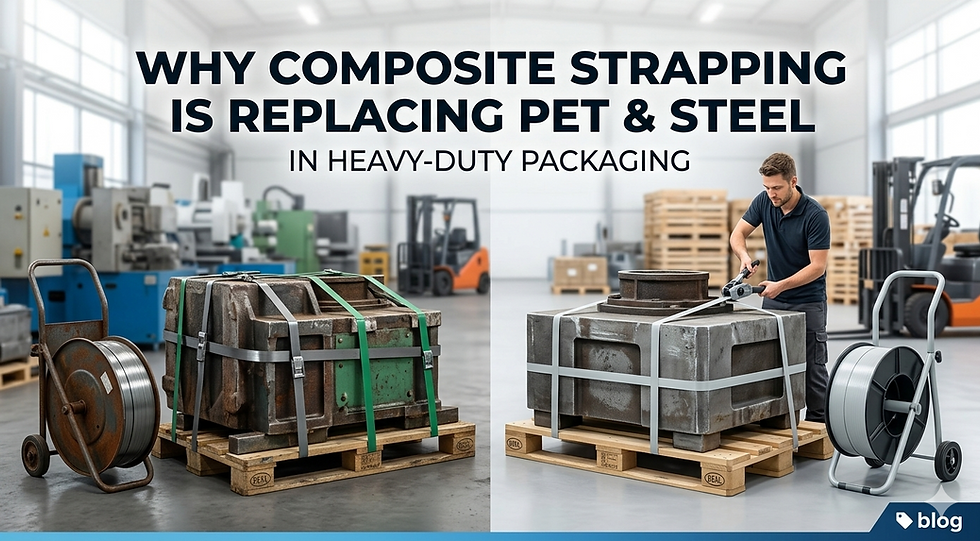
The packaging industry has changed rapidly in the past decade, with composite strapping—made from high-strength polypropylene and polyester—emerging as the preferred material for heavy-duty packaging. This shift is driven by tangible advantages that impact a company's bottom line.
Understanding the Problem with Traditional Materials
For decades, businesses faced a difficult choice when securing heavy packages. PET strapping offered affordability but lacked the necessary strength for extremely heavy loads. Steel strapping provided superior strength but came with serious drawbacks, including rust, sharp edges that posed safety risks, and complicated recycling processes. Workers handling steel-strapped bundles faced the risk of injury from sharp ends and broken bands, while the material itself created disposal headaches at the end of a package's lifecycle.
PET strapping also had limitations that became increasingly apparent as shipping demands intensified. The material could break under extreme tension, was susceptible to temperature fluctuations, and didn't perform reliably in outdoor or moist environments. Companies shipping heavy machinery, building materials, or metal products often find themselves replacing broken straps mid-shipment, leading to costly delays and damaged goods.
The Rise of Composite Strapping
Composite strapping combines the best characteristics of both traditional materials while eliminating their weaknesses. The core structure consists of high-tenacity (exceptionally strong and tough) polypropylene fibers reinforced with polyester, creating a material that's simultaneously lightweight and incredibly strong. A composite strapping manufacturer in China or anywhere globally can produce bands that match or exceed the breaking strength of steel while remaining flexible enough to conform to irregular package shapes.
What makes composite strapping particularly attractive is its performance across a range of conditions. Unlike steel, it won't rust when exposed to moisture or salt air during ocean transport. Unlike PET, it maintains its strength over a wider temperature range and resists UV degradation. This versatility means manufacturers can use a single material for multiple applications rather than switching between different strapping types depending on conditions.
Superior Load-Holding Capacity
Composite strapping holds tension through transport, unlike steel, which can loosen as loads settle. Its flexibility reduces the risk of snapping and keeps packages secure throughout the journey.
The material achieves tensile strengths between 1,000 and 2,000 pounds per inch width, depending on the specific formulation. (Tensile strength is the maximum stress a material can withstand while being pulled or stretched before breaking.) This means a single band of composite strapping can secure loads that previously required multiple steel bands. For shipping companies, this translates directly to reduced material costs and faster strapping processes. Workers can apply composite strapping with standard hand tools or automated equipment, and the absence of sharp edges means fewer workplace injuries.
Economic Advantages That Matter
The financial case for composite strapping is straightforward. A composite strapping manufacturer in China and other regions can produce the material at costs significantly lower than traditional steel manufacturing. The lightweight nature of composite strapping also reduces shipping weight, which matters considerably for companies that pay freight based on dimensional weight (a pricing method that uses a package's volume to calculate shipping charges) rather than actual weight.
Consider a company shipping steel coils or heavy machinery. Switching from steel strapping to composite can reduce the total package weight by 5 to 8 percent in many cases. Over thousands of shipments annually, this difference accumulates into substantial savings on freight costs. Additionally, composite strapping doesn't require the specialized tools and training that steel strapping demands. Workers can apply it more quickly, reducing labor costs per shipment.
Composite strapping arrives ready to use and eliminates the costs of rust prevention or the extra protective coatings required by steel strapping.
Environmental and Safety Considerations
Modern consumers and regulatory bodies increasingly care about a company's environmental footprint, and composite strapping offers significant advantages in this regard. The material is fully recyclable through standard plastic recycling streams in most developed countries. Steel strapping, while technically recyclable, often ends up in landfills because the cost and complexity of separating it from other waste make recycling economically impractical.
The safety benefits extend beyond the manufacturing floor. Composite strapping eliminates the sharp edges and broken ends that have caused workplace injuries for generations. Workers no longer face cuts from loose steel ends or have to manage heavy, awkward materials that strain the back. The lighter weight means less physical stress over the course of a work shift, which translates to fewer workers' compensation claims and improved employee morale.
Performance in Real-World Conditions
What truly drives adoption is performance in actual shipping conditions. Companies have discovered that composite strapping handles the rigors of international shipping better than traditional materials. Shipments that cross multiple climate zones maintain their integrity better because composite doesn't become brittle in cold temperatures or lose strength in heat, unlike some plastics.
The material also resists moisture absorption far better than standard PET strapping. This matters tremendously for products shipped in containers exposed to sea spray or stored in humid environments before shipment. Packages that might have arrived damaged when made with older materials now arrive in perfect condition.
Intermodal shipping, which combines trucks, trains, and ships, places unique stresses on packaging. Repeated handling, vibration, and environmental exposure can cause inferior strapping to break. Composite strapping withstands these challenges, reducing damage claims and replacing costs.
The Manufacturing Perspective
From the perspective of packaging manufacturers, composite strapping offers greater production flexibility. A composite strapping manufacturer in China or elsewhere can customize the material to specific needs, creating products that excel in particular applications. Some formulations prioritize strength, others focus on environmental resistance, and others balance both.
Manufacturers can tailor composite strapping to different needs, whether for a gentle grip or maximum holding, offering a precise solution for each application.
Looking Forward
The transition from steel and PET to composite strapping isn't happening by accident. It reflects genuine advances in materials science and real-world economic benefits. More companies make the switch every year, and as volume increases, manufacturing costs continue to decline, making the material even more attractive to businesses of all sizes.
Despite its reputation for slow change, the packaging industry is gaining momentum in adopting composite strapping. Companies that haven't yet evaluated composite strapping for their applications are missing opportunities to reduce costs, improve safety, and lighten their environmental impact. As supply chains become increasingly complex and global, having a strapping material that performs reliably across diverse conditions becomes more valuable, not less.
Composite strapping represents a genuine advancement in packaging technology, not a fleeting trend. For businesses serious about optimizing their shipping processes, the evidence overwhelmingly supports switching from traditional materials to this innovative solution that delivers real results.


Comments