Top Mistakes Importers Make When Sourcing Composite Strapping from China
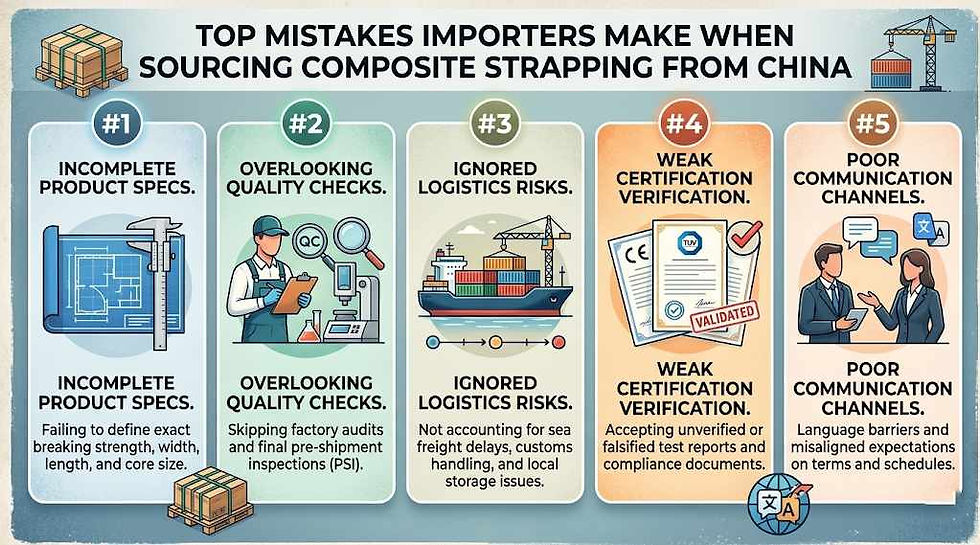
Composite strapping has become a preferred choice for securing heavy loads in logistics, warehousing, and industrial applications. Its combination of polyester fibers and polymer coatings provides strength, flexibility, and safety compared to traditional steel strapping. As global demand rises, many businesses turn to China for sourcing due to its extensive manufacturing base and competitive pricing. However, importers often encounter challenges that can undermine their investment. This guide highlights the most common mistakes importers make when sourcing from a composite strapping manufacturer in China and offers practical strategies to avoid them.
Mistake 1: Ignoring Certification and Compliance
One of the most frequent errors is failing to verify whether the manufacturer complies with international standards. Certifications such as ISO 9001, SGS, or TÜV are not just formalities; they ensure that the strapping meets performance and safety benchmarks required in global trade. Importers who overlook this step risk receiving products that fail under stress, leading to cargo damage and liability issues.
How to Avoid It:
Always request certification documents and verify them with the issuing authority. Reliable suppliers will provide test reports detailing breaking strength, elongation, and resistance to environmental factors.
Mistake 2: Choosing Based Solely on Price
China’s competitive pricing can be tempting, but the cheapest option often comes with hidden costs. Low-cost strapping may be produced with inferior fibers or coatings, resulting in poor durability. Importers who prioritize price over quality often face higher long-term expenses due to damaged goods, insurance claims, and reputational harm.
How to Avoid It:
Balance cost with value. Evaluate material quality, production capacity, and after-sales support before making a decision. A trustworthy composite strapping manufacturer in China will offer competitive pricing without compromising reliability.
Mistake 3: Overlooking Production Capacity and Scalability
Importers sometimes fail to assess whether a manufacturer can handle growing demand. Small factories may deliver acceptable quality initially but struggle with larger orders, leading to delays and inconsistent product standards.
How to Avoid It:
Conduct factory audits or request production line details. Manufacturers with automated weaving and coating systems are better equipped to scale while maintaining consistency.
Mistake 4: Neglecting Tool Compatibility
Composite strapping must work seamlessly with tensioners and sealers. Some manufacturers design proprietary systems that lock buyers into costly equipment purchases. Importers who overlook compatibility may find themselves forced to invest in specialized tools, increasing operational costs.
How to Avoid It:
Confirm that the strapping is compatible with widely available tools. Request samples and test them with your existing equipment before committing to bulk orders.
Mistake 5: Failing to Verify Export Experience
Not all manufacturers are familiar with international shipping requirements. Importers who choose suppliers without export experience risk delays due to improper documentation, packaging errors, or customs issues.
How to Avoid It:
Select manufacturers with a proven export history. Ask for references from international clients and review case studies that demonstrate successful shipments.
Mistake 6: Accepting Vague Product Descriptions
Generic descriptions such as “high strength” or “durable” are insufficient. Importers who rely on vague claims often receive products that do not meet their operational needs.
How to Avoid It:
Request detailed technical data sheets. Reliable suppliers will provide specifications such as tensile strength, elongation percentage, and resistance to UV or moisture.
Mistake 7: Skipping Factory Audits
Many importers rely solely on online communication and fail to conduct factory audits. Without firsthand verification, it is difficult to assess production quality, worker safety, and quality control processes.
How to Avoid It:
Hire third-party inspection agencies in China to conduct audits. These agencies provide detailed reports on production lines, safety measures, and compliance standards.
Mistake 8: Ignoring Digital Transparency
In 2026, many manufacturers will offer digital dashboards that allow clients to track production schedules, quality checks, and shipment status. Importers who ignore this level of transparency miss an opportunity to monitor performance in real time.
How to Avoid It:
Choose suppliers who provide digital visibility. Transparency builds trust and reduces the risk of miscommunication.
Mistake 9: Overlooking After-Sales Support
Composite strapping is not just about the product; it also involves tools, maintenance, and replacement parts. Importers who neglect after-sales support may struggle with tool breakdowns or a lack of technical guidance.
How to Avoid It:
Evaluate the supplier’s support services. Reliable manufacturers offer training, tool maintenance, and spare parts to ensure smooth operations.
Mistake 10: Failing to Negotiate Contracts Properly
Some importers rush into agreements without including clauses for quality assurance, delivery timelines, or penalties for non-compliance. This leaves them vulnerable to delays and inconsistent product standards.
How to Avoid It:
Negotiate contracts carefully. Include clear terms for quality checks, delivery schedules, and dispute resolution mechanisms.
Mistake 11: Not Testing Samples
Skipping sample testing is a critical mistake. Importers who rely on promises without testing strapping under real-world conditions risk investing in unsuitable products.
How to Avoid It:
Always order samples and test them with your actual cargo. This ensures the strapping performs as expected before committing to bulk purchases.
Mistake 12: Ignoring Hidden Costs
Beyond the purchase price, hidden costs such as shipping delays, customs penalties, and tool incompatibility can erode profitability. Importers who fail to account for these costs often underestimate the true expense of sourcing.
How to Avoid It:
Conduct a full cost analysis. Factor in logistics, compliance, and potential risks when evaluating suppliers.
Mistake 13: Overlooking Long-Term Partnerships
Some importers treat sourcing as a one-time transaction. This short-term mindset prevents them from building stable relationships that provide consistent quality and pricing.
How to Avoid It:
Develop long-term partnerships with reliable suppliers. Stable contracts protect against market fluctuations and ensure a consistent supply.
Mistake 14: Ignoring Red Flags
Importers sometimes overlook warning signs such as delayed responses, reluctance to provide documentation, or inconsistent communication. These red flags often indicate unreliable suppliers.
How to Avoid It:
Pay attention to communication quality. A dependable composite strapping manufacturer in China will respond promptly, provide clear documentation, and maintain professional transparency.
Conclusion
Sourcing composite strapping from China offers significant opportunities, but importers must navigate common pitfalls to secure reliable suppliers. Mistakes such as ignoring certifications, choosing solely based on price, neglecting audits, or overlooking tool compatibility can lead to costly consequences. By conducting due diligence, verifying compliance, and prioritizing long-term value, importers can avoid these errors and build successful partnerships with a trustworthy composite strapping manufacturer in China.
In 2026, the fundamentals of sourcing remain timeless: trust, transparency, and verifiable quality. Importers who adopt a structured approach will not only protect their cargo but also strengthen their position in global logistics.


Comments